 By IK Journal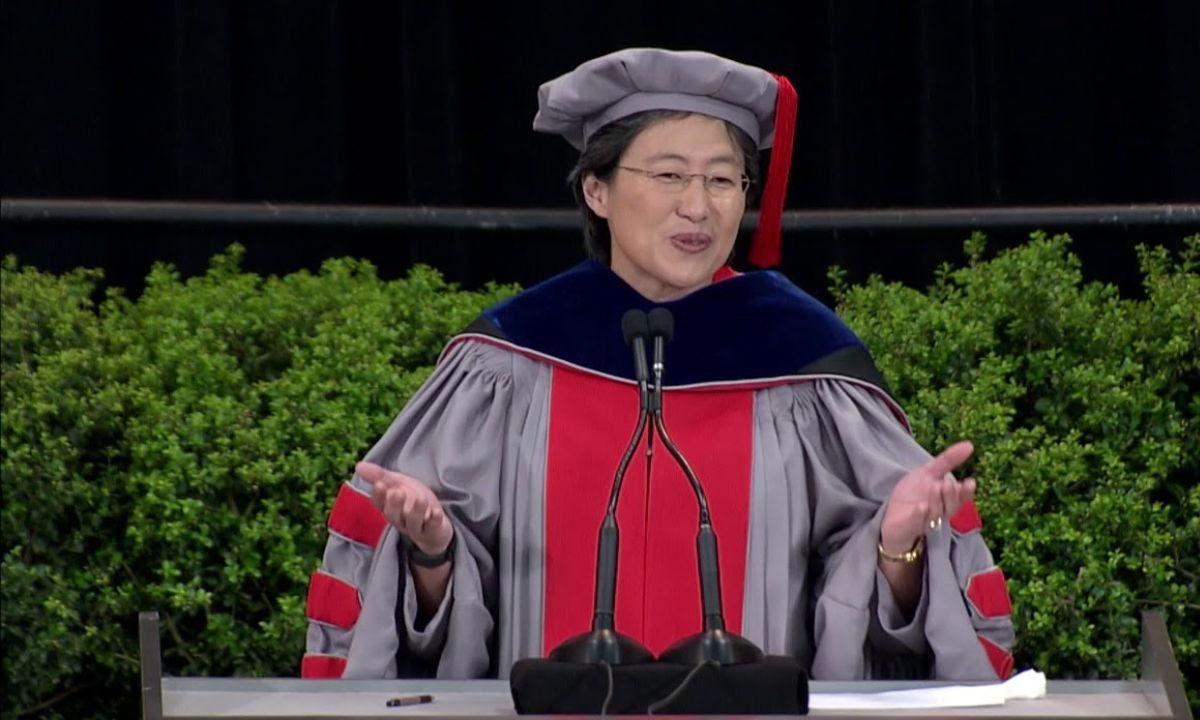
Lisa Su is one of the most influential technology executives of the modern semiconductor industry. As chair and CEO of AMD, she has helped guide the company through a major transformation while expanding its presence in high-performance computing and artificial intelligence.
But before Lisa Su became the leader of one of the world’s most important semiconductor companies, she was an engineering student fascinated by how technology worked.
Her education played a major role in shaping the way she approaches difficult technical problems, product development and business decisions.
From her early interest in mathematics and science to her years at the Massachusetts Institute of Technology, Lisa Su’s educational journey provides an interesting example of how technical knowledge can become the foundation for an extraordinary leadership career.
Lisa Su Education: An Overview
Lisa Su’s formal education is strongly connected to electrical engineering and semiconductor technology.
She earned three degrees from MIT:
- Bachelor of Science in Electrical Engineering
- Master of Science in Electrical Engineering
- Doctor of Philosophy in Electrical Engineering
Her academic journey eventually led to a career involving semiconductor research, engineering, technology management and corporate leadership.
The combination is important.
Lisa Su did not begin her career as a traditional business executive.
She began as an engineer.
That technical foundation remained relevant throughout her career and eventually became one of the defining characteristics of her leadership at AMD.
Where Did Lisa Su Study?
Lisa Su studied at the Massachusetts Institute of Technology, commonly known as MIT.
MIT is one of the world’s best-known institutions for engineering, science and technology.
For Su, the university became much more than a place to earn academic qualifications.
It was where she developed the problem-solving approach that later became an important part of her professional life.
MIT’s own account of Su’s career notes that she developed a deep interest in semiconductors during her undergraduate years and later pursued graduate research in the field.
Her time at MIT therefore connected education with the technology industry she would eventually lead.
Lisa Su Bachelor’s Degree
Lisa Su earned her bachelor’s degree in electrical engineering from MIT.
Electrical engineering gave her a foundation in areas directly connected to modern computing and semiconductor technology.
The field involves subjects such as electronics, circuits, semiconductor devices, computer systems and electrical systems.
For someone who would eventually become the CEO of AMD, this technical foundation proved highly relevant.
But a degree alone does not explain Su’s later success.
The more interesting question is what she did with that education.
Her academic experience gave her a way to approach complex problems.
Instead of seeing technology as a collection of finished products, an engineer can learn to examine the underlying systems and understand why they work.
That mindset became important throughout Su’s career.
Lisa Su Master’s Degree
After completing her undergraduate studies, Su continued her education at MIT and earned a master’s degree in electrical engineering.
Graduate-level study allowed her to move deeper into semiconductor technology and research.
This stage was important because semiconductor engineering is an unusually technical field.
Modern processors depend on extremely complex relationships between materials, transistor structures, manufacturing processes, architecture and system design.
A deeper understanding of electrical engineering therefore provided Su with a technical foundation that could later be applied to real-world semiconductor development.
Her education was moving from broad engineering principles toward highly specialized technology.
Lisa Su PhD
Lisa Su completed her PhD in electrical engineering at MIT.
Her doctoral research focused on semiconductor technology, including silicon-on-insulator technology.
This was significant because semiconductor performance depends heavily on the physical structure and manufacturing characteristics of the devices used to build computing systems.
Doctoral research requires a different level of thinking from undergraduate study.
Students must investigate difficult questions, analyze evidence, develop methods and contribute new knowledge.
That process can develop skills that remain valuable long after graduation.
For Su, those skills later became useful in both engineering and management.
What Did Lisa Su Study at MIT?
Lisa Su’s academic specialization centered on electrical engineering and semiconductor technology.
Her research interests were closely connected to how semiconductor devices could be designed and improved.
MIT’s biography of Su notes that she became deeply interested in semiconductors during her undergraduate years and conducted doctoral research related to silicon-on-insulator technology.
This area of research was highly technical.
It required understanding how semiconductor materials and device structures affect performance.
That experience gave Su an unusually strong foundation for a career in advanced computing.
Why Was Engineering Important to Lisa Su?
Engineering became the foundation of Lisa Su’s professional identity.
There is an important distinction between understanding a technology as a consumer and understanding it as an engineer.
A consumer sees the final product.
An engineer asks:
How does it work?
Why does it work this way?
What limits its performance?
How can it be improved?
What happens if the design changes?
These questions are central to semiconductor development.
They also translate surprisingly well into business leadership.
A CEO who understands technology can sometimes evaluate opportunities differently from a leader whose background is primarily financial or marketing-oriented.
This does not mean technical knowledge automatically creates good leadership.
But it can provide a powerful foundation for decision-making.
Lisa Su’s Education and Problem-Solving
One of the most interesting aspects of Lisa Su’s educational story is the importance she places on problem-solving.
During a 2017 MIT address, Su discussed how MIT taught her to think and solve difficult problems.
That idea provides a useful way to understand her career.
Semiconductor companies constantly face difficult problems.
Engineers must improve performance.
Manufacturers must deal with physical limitations.
Design teams must balance power consumption and speed.
Businesses must decide where to invest.
Customers need better computing solutions.
The ability to approach difficult problems systematically can therefore become a competitive advantage.
How MIT Influenced Lisa Su’s Career
MIT gave Lisa Su more than technical knowledge.
It helped develop a mindset that combined curiosity, experimentation and problem-solving.
Her education also gave her exposure to a demanding environment where technical concepts had to be understood deeply.
That foundation later helped her move between engineering and management.
Her career demonstrates that technical expertise does not necessarily restrict someone to a laboratory.
It can become a pathway toward business leadership.
Lisa Su’s First Professional Step
After completing her doctoral education, Lisa Su began her professional career in semiconductor engineering.
Her early work connected directly to the subjects she had studied.
This is significant because her career did not represent a complete break from academia.
Instead, she moved from studying semiconductor technology to applying it.
That transition helped her build practical experience.
Over time, she would learn how technology moves from research into commercial products.
That knowledge became increasingly valuable as she progressed into management.
Lisa Su at Texas Instruments
One of Lisa Su’s earliest professional positions was at Texas Instruments.
She worked in the company’s Semiconductor Process and Device Center.
This gave her direct exposure to semiconductor engineering in an industrial environment.
The transition from university research to industry can be challenging.
Academic research often focuses on discovering and understanding new possibilities.
Industry must also consider cost, manufacturing, reliability, customers and commercial schedules.
Su’s early experience helped bridge those two worlds.
She was learning not only how semiconductor technology worked, but how technology could become part of a business.
Lisa Su’s IBM Career
Lisa Su later joined IBM, where she spent more than a decade.
Her career at IBM included increasingly senior engineering and business leadership responsibilities.
She eventually became vice president of IBM’s Semiconductor Research and Development Center.
This was an important stage in her career.
At IBM, Su was able to combine technical expertise with organizational leadership.
She was no longer simply working on engineering problems.
She was also involved in technology strategy, research direction and collaboration.
That combination prepared her for the executive roles she would later hold.
Why IBM Was Important to Lisa Su’s Career
IBM helped expand Su’s understanding of technology beyond individual engineering projects.
Large technology organizations require coordination between research, engineering, manufacturing and business operations.
Su’s IBM experience gave her exposure to that complexity.
It also helped demonstrate that technical expertise and leadership could develop together.
This became a recurring theme in her career.
She continued moving closer to positions where technology decisions and business decisions overlapped.
Lisa Su at Freescale Semiconductor
After IBM, Su joined Freescale Semiconductor.
At Freescale, she held senior leadership roles involving technology, engineering, strategy and business operations.
She eventually served as chief technology officer and later became senior vice president and general manager of the company’s Networking and Multimedia business.
This period was important because she was increasingly responsible for more than research.
She was now dealing with product strategy and business execution.
Her education had provided technical depth.
Her professional career was adding commercial and organizational depth.
That combination would later become one of her greatest strengths.
When Did Lisa Su Join AMD?
Lisa Su joined AMD in January 2012.
AMD’s official biography states that she initially joined as senior vice president and general manager of the Global Business Units.
Her responsibilities included driving end-to-end business execution of AMD products and solutions.
She later became chief operating officer before being appointed president and CEO in October 2014.
She became chair of AMD’s board in February 2022.
This career progression shows how her education eventually connected to one of the highest levels of technology leadership.
How Lisa Su’s Education Helped at AMD
At AMD, Lisa Su’s engineering background became especially relevant.
Semiconductor companies operate in markets where technical decisions can determine business success.
A product roadmap must be technically realistic.
Architecture decisions affect future performance.
Manufacturing technology influences cost and efficiency.
Software affects the usefulness of hardware.
Customers expect reliable performance.
A leader who understands these relationships can ask highly technical questions while also considering business consequences.
That is one reason Su’s engineering background is so interesting.
She did not leave technology behind when she entered management.
She brought it with her.
Lisa Su’s Education and Leadership Style
Su’s educational background helps explain several characteristics associated with her leadership.
Technical Depth
She understands the technology behind AMD’s products.
Problem-Solving
Her engineering education trained her to approach difficult questions systematically.
Long-Term Thinking
Research and engineering often require patience because major technical improvements can take years.
Evidence-Based Decisions
Engineering encourages testing ideas against evidence rather than relying only on assumptions.
Continuous Learning
Technology changes constantly, making continued education and learning essential.
These characteristics can be seen throughout Su’s career.
Why Lisa Su Is an Example for Engineering Students
Lisa Su’s story is particularly relevant to students studying engineering today.
Her career demonstrates that an engineering degree does not lead only to one type of job.
An engineer can become:
- a researcher
- a product leader
- a technology executive
- a business strategist
- a CEO
- an entrepreneur
- an industry leader
Su’s career moved across several of these areas.
She began with technical work and gradually expanded her responsibilities.
That is an important lesson for students who may assume they must choose between technology and management.
The two can complement each other.
What Students Can Learn From Lisa Su’s Education
Lisa Su’s academic journey offers several practical lessons.
1. Build Strong Fundamentals
Deep knowledge of fundamental concepts can remain valuable for decades.
2. Learn How to Solve Problems
Memorizing information is not enough.
The ability to solve unfamiliar problems is often more important.
3. Connect Education With Real-World Problems
Technical knowledge becomes more valuable when it can be applied to real challenges.
4. Keep Learning After Graduation
Technology changes quickly.
A degree is the beginning of professional learning, not the end.
5. Do Not Limit Your Career Too Early
Su moved from engineering into business leadership.
Her career demonstrates the value of remaining open to new opportunities.
Lisa Su Education Timeline
| Year | Education / Career Milestone |
|---|---|
| Early years | Developed an interest in technology and engineering |
| 1990 | Earned bachelor’s degree from MIT |
| 1991 | Earned master’s degree from MIT |
| 1994 | Earned PhD in electrical engineering from MIT |
| 1994 | Began semiconductor career at Texas Instruments |
| 1995 | Joined IBM |
| 2007 | Joined Freescale Semiconductor |
| 2012 | Joined AMD |
| 2014 | Became AMD president and CEO |
| 2022 | Became chair of AMD’s board |
| 2026 | Continues leading AMD’s high-performance and AI computing strategy |
The MIT degree dates are documented by MIT, while AMD confirms her career progression and current role.
Lisa Su Education vs. Jensen Huang Education
Lisa Su’s educational background can also be compared with another major semiconductor leader: Jensen Huang.
Both leaders developed strong engineering foundations before becoming technology CEOs.
But their academic and career journeys are not identical.
Lisa Su built her education around electrical engineering and semiconductor research at MIT.
Jensen Huang also developed an engineering background before co-founding NVIDIA.
Their stories demonstrate an important pattern in technology leadership:
deep technical knowledge can become a powerful foundation for business innovation.
The difference is what each leader eventually built with that foundation.
Does Lisa Su Have a PhD?
Yes.
Lisa Su earned a PhD in electrical engineering from MIT.
Her doctoral work focused on semiconductor technology and contributed to the technical foundation of her later career.
Her doctorate is one of the distinguishing features of her educational background and helps explain the depth of her engineering expertise.
What Was Lisa Su’s PhD Research About?
Her doctoral research involved silicon-on-insulator technology and semiconductor devices.
The research was focused on technical challenges related to semiconductor performance and device engineering.
This type of research is highly relevant to the broader semiconductor industry because improvements at the device level can influence the capabilities of future computing technologies.
Is Lisa Su an Engineer or a Business Leader?
She is both.
Lisa Su began her career as an engineer and researcher before moving into increasingly senior management roles.
Today she is best known as the chair and CEO of AMD.
Her career is a useful example of how technical expertise and business leadership can develop together.
Why Lisa Su’s Education Matters to Her Success
Education alone does not create a successful CEO.
Many people earn advanced degrees without becoming corporate leaders.
What makes Su’s story interesting is how she combined education with decades of practical experience.
Her career developed in stages:
Education → Engineering → Research → Technology Management → Product Strategy → Executive Leadership
Each stage added another layer.
The result was a leader who could understand technology while also managing large organizations and making strategic business decisions.
The Bigger Lesson From Lisa Su’s Academic Journey
The biggest lesson from Lisa Su’s education may not be the name of the university she attended or the degrees she earned.
It is the way she used education.
She did not treat learning as an endpoint.
She used technical knowledge as a foundation for solving increasingly complex problems.
Her career suggests that education becomes most powerful when it is continuously applied, expanded and connected to real-world challenges.
That lesson applies far beyond semiconductor engineering.
Frequently Asked Questions
Where did Lisa Su go to college?
Lisa Su attended the Massachusetts Institute of Technology, where she earned bachelor’s, master’s and doctoral degrees in electrical engineering.
What degree does Lisa Su have?
Lisa Su holds bachelor’s, master’s and PhD degrees in electrical engineering from MIT.
What did Lisa Su study?
She studied electrical engineering and developed a specialization in semiconductor technology.
Did Lisa Su study at MIT?
Yes. MIT was a major part of her academic journey, and she completed all three of her engineering degrees there.
What was Lisa Su’s PhD about?
Her doctoral research focused on semiconductor technology, including silicon-on-insulator device technology.
Where did Lisa Su work before AMD?
Before joining AMD, Su worked at Texas Instruments, IBM and Freescale Semiconductor.
When did Lisa Su join AMD?
She joined AMD in January 2012 as senior vice president and general manager of Global Business Units.
When did Lisa Su become AMD CEO?
Lisa Su became AMD’s president and CEO in October 2014.
Did Lisa Su’s engineering education help her become CEO?
Her engineering education provided a strong technical foundation, while her later experience at Texas Instruments, IBM, Freescale and AMD developed her management and business leadership capabilities.
Conclusion
Lisa Su’s education is one of the most important foundations of her technology career.
Her journey from MIT electrical engineering student to semiconductor researcher, technology executive and AMD CEO demonstrates how technical education can evolve into broader leadership capability.
She did not become a technology leader by abandoning engineering.
Instead, she expanded the value of her engineering knowledge.
She learned how technology works, how products are developed, how organizations execute strategy and how businesses compete in rapidly changing markets.
That combination helped shape the leader she became.
For students and young professionals, the message is powerful:
Learn deeply. Solve difficult problems. Keep learning. And do not assume that your first career role will define the limits of your future.
Lisa Su’s career shows that a strong technical foundation can become the starting point for much bigger ambitions.
You May Also Like: Jensen Huang Biography: Career, NVIDIA, and the Journey of a Visionary Tech Leader