 By IK Journal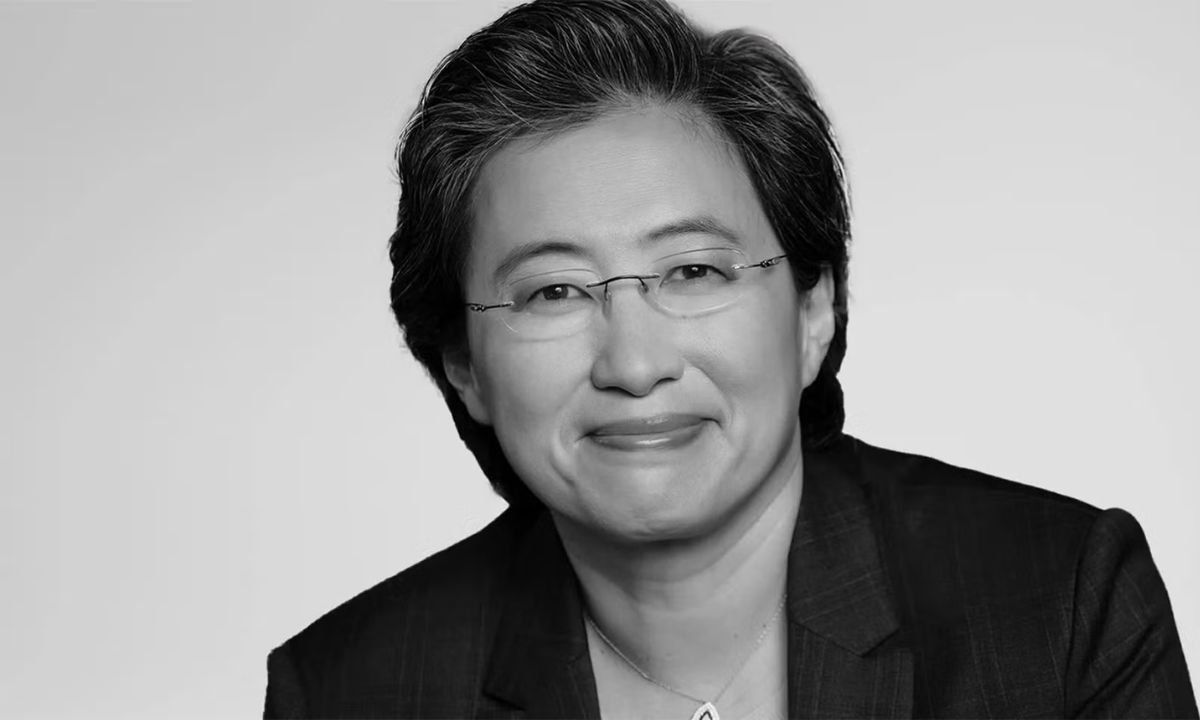
Lisa Su’s leadership style has become one of the most interesting case studies in modern technology management.
When she became AMD’s president and CEO in 2014, the company was facing intense competition in the semiconductor industry. More than a decade later, AMD has developed into a major force in CPUs, GPUs, data-center computing and artificial intelligence.
Su’s story is not simply about becoming a successful CEO.
It is about how technical knowledge, strategic focus, disciplined execution and long-term investment can change the direction of a technology company.
AMD’s official biography says Su has led the company’s transformation into a high-performance and adaptive computing leader, while her responsibilities have increasingly expanded around AI and next-generation computing.
So what exactly makes Lisa Su’s leadership style different?
And what can entrepreneurs, managers and business leaders learn from the way she has led AMD?
Who Is Lisa Su?
Dr. Lisa Su is the chair and chief executive officer of AMD.
She joined AMD in January 2012 as senior vice president and general manager of its Global Business Units. She later became chief operating officer before being appointed president and CEO in October 2014. She became chair of AMD’s board in February 2022.
Before AMD, Su held senior technical and business positions at Freescale Semiconductor and IBM. AMD’s official biography notes that she spent 13 years at IBM, including serving as vice president of its Semiconductor Research and Development Center.
This technical background is important.
Su is not a CEO who came to technology from an unrelated business discipline.
Engineering has been a central part of her career.
That has strongly influenced the way she approaches leadership.
What Is Lisa Su’s Leadership Style?
Lisa Su’s leadership style can be described through several core principles:
- Technical understanding
- Strategic focus
- Long-term thinking
- Product discipline
- Calculated risk-taking
- Execution
- Customer focus
- Collaboration
- Continuous learning
- Clear priorities
AMD itself describes Su’s philosophy around taking bold but calculated risks and aggressively pursuing leading-edge technologies.
That phrase is important.
Her approach is not simply about taking big risks.
It is about calculated risks.
The difference is significant.
A reckless leader takes risks because the potential reward looks exciting.
A strategic leader studies the technology, market, resources and timing before deciding whether the risk is worth taking.
Su’s career provides many examples of the second approach.
1. Lisa Su Leads With Technical Knowledge
One of the strongest characteristics of Su’s leadership is her engineering background.
She earned multiple engineering degrees from MIT, including a PhD in electrical engineering.
Her career began in semiconductor engineering and research before moving into business leadership.
That technical foundation allows her to understand the products and technologies behind AMD’s business.
For a semiconductor company, that matters enormously.
AMD competes in markets where architecture, manufacturing, performance, energy efficiency, software and system design can determine whether a product succeeds or fails.
A CEO does not need to design every processor personally.
But understanding the underlying technology helps a leader ask better questions.
It also makes it easier to distinguish between:
a genuine technical breakthrough
and
a marketing claim.
2. She Focuses on the Product
One of the most important lessons from Su’s leadership is the importance of product quality.
A company cannot become a long-term technology leader through financial strategy alone.
It needs products that customers actually want.
Under Su, AMD invested heavily in new processor architectures and product roadmaps.
The result was a stronger competitive position across consumer, gaming and data-center markets.
This product-centered approach is particularly important for companies operating in highly technical industries.
A CEO can change the organizational structure.
A CEO can change the marketing strategy.
But if the underlying product cannot compete, the business eventually struggles.
Su’s leadership demonstrates the opposite principle:
Build products that create the strategic advantage first.
3. Long-Term Thinking Is Central to Her Strategy
Technology companies often face pressure to deliver immediate results.
Investors want growth.
Customers want better products.
Employees want resources.
Competitors are moving quickly.
Yet some technological breakthroughs require years of investment.
Su has repeatedly emphasized long-term technology roadmaps.
AMD’s 2025 Financial Analyst Day, for example, presented a long-term strategy centered on high-performance computing, data-center growth and AI. The company described a broader opportunity in the computing market and outlined ambitious growth objectives.
This reflects an important leadership principle:
Do not sacrifice the future simply to make the present look better.
Short-term performance matters.
But technology companies also need to build the products that will generate future performance.
4. Focus Can Be More Powerful Than Doing Everything
Another important element of Lisa Su’s leadership style is strategic focus.
A company with limited resources cannot dominate every market simultaneously.
It must decide where it can realistically build a competitive advantage.
This means asking:
- Where are we strongest?
- Where can our technology create differentiation?
- Which markets are growing?
- Which investments should receive priority?
- Which opportunities should we ignore?
Strategic focus prevents organizations from spreading their resources too thinly.
For entrepreneurs, this is one of the most useful lessons from Su.
Sometimes growth does not come from adding more projects.
It comes from removing distractions and concentrating resources on the projects that matter most.
5. She Embraces Calculated Risk
AMD’s own leadership profile describes Su’s philosophy as taking bold, calculated risks and pursuing leading-edge technologies.
That philosophy is especially relevant in semiconductors.
Chip development can require enormous investments.
A company may spend years developing a technology before knowing whether customers will adopt it at the expected scale.
Avoiding all risk would therefore be impossible.
The goal is to make better risks.
A calculated risk usually includes:
Evidence + timing + resources + technical capability + market opportunity
rather than simply optimism.
This is a valuable distinction for startup founders.
6. Execution Matters as Much as Vision
Vision is attractive.
Execution is difficult.
A CEO can announce a brilliant strategy, but the organization still has to turn that strategy into products.
That requires engineering teams, supply chains, manufacturing partners, software, sales teams and customer relationships.
AMD’s current AI strategy demonstrates this execution challenge.
At CES 2026, AMD presented its Helios rack-scale AI platform alongside new Instinct accelerators, EPYC processors and networking technologies. The company positioned these technologies as components of a broader AI infrastructure strategy.
The important lesson is that strategic vision becomes valuable only when the organization can execute it.
Su’s leadership therefore combines:
Vision → Product Roadmap → Engineering → Execution → Customer Adoption
That chain is fundamental to technology leadership.
7. She Builds Around Difficult Problems
Su’s public leadership repeatedly focuses on solving difficult computing problems.
AMD’s current strategy is increasingly centered on AI infrastructure, high-performance computing and data-center workloads.
In AMD’s first-quarter 2026 results, Su said accelerating demand for AI infrastructure was driving growth, with data center becoming the primary driver of revenue and earnings growth.
This illustrates another important principle:
Follow important problems, not temporary hype.
AI is certainly a major trend.
But AMD’s opportunity is not simply “AI.”
The deeper problem is the enormous amount of computing required to train and run increasingly sophisticated AI systems.
That is a much more durable strategic question.
8. Lisa Su Thinks in Systems
Modern computing is no longer about one processor operating independently.
A complete AI system may involve:
- CPUs
- GPUs
- networking
- memory
- software
- servers
- racks
- cooling
- data centers
- developer tools
AMD’s current product strategy reflects this broader system-level thinking.
Its Helios platform combines AMD computing and networking technologies into a larger infrastructure design.
This creates an important leadership lesson.
When markets become more complex, companies should stop thinking only about individual products.
They should ask:
What complete problem are our customers trying to solve?
That question often reveals larger opportunities.
9. She Uses Partnerships as a Growth Engine
Innovation does not always have to happen entirely inside one company.
Partnerships can accelerate development.
AMD’s 2026 strategy includes collaborations across AI companies, cloud infrastructure, software developers and other technology partners.
At CES 2026, AMD highlighted collaborations with organizations including OpenAI, Luma AI, World Labs, Blue Origin, AstraZeneca, Absci and Illumina.
This demonstrates an ecosystem-oriented approach.
Instead of asking:
“How can AMD do everything itself?”
the strategy becomes:
“How can AMD work with the right organizations to create a larger ecosystem?”
For startups, partnerships can provide access to customers, technology, expertise and distribution that would otherwise take years to develop.
10. She Balances Engineering With Business
Technical expertise alone does not make someone an effective CEO.
A technology leader also needs to understand:
- customers
- markets
- competition
- finance
- operations
- partnerships
- employees
- investors
Su’s career includes both technical and business leadership positions.
Before becoming CEO, she had already held responsibilities involving business units, product strategy and execution. AMD says her COO role included integrating business units, sales, global operations and infrastructure enablement teams.
This combination gives her an unusual perspective.
She can connect engineering decisions with commercial outcomes.
That is a valuable leadership capability.
11. She Keeps Learning
Technology changes quickly.
A leader who stops learning eventually becomes dependent on information from people who understand the new technology better.
Su’s engineering background has remained relevant as AMD expanded into AI and other advanced computing areas.
AMD’s 2026 Advancing AI event continues to position Su as a central voice in the company’s AI infrastructure and computing strategy.
For leaders, the lesson is straightforward:
Your education should not end when you receive your degree.
Industries evolve.
Customers change.
Technology changes.
Leadership must change with them.
12. She Focuses on Sustainable Competitive Advantage
A successful product can create temporary growth.
A strong technology platform can create a much deeper advantage.
AMD’s current strategy is designed around a broad portfolio of CPUs, GPUs, networking and software rather than relying on one product category. AMD describes its approach as full-stack AI solutions designed for performance and scalability.
This diversification within a coherent technology strategy matters.
The goal is not to create dozens of unrelated products.
It is to create complementary technologies that strengthen the overall platform.
That is a more sustainable approach to competition.
13. She Understands That Timing Matters
Even excellent technology can fail if it arrives too early or too late.
A leader must therefore understand timing.
When should a company invest?
When should it launch?
When should it scale?
When should it partner?
When should it wait?
Su’s leadership at AMD has involved navigating multiple technology cycles, from CPUs and GPUs to cloud computing and AI.
The current AI cycle demonstrates why timing remains critical.
AMD is expanding its AI infrastructure portfolio while demand for AI computing continues to grow. Its 2026 results and product announcements show the company trying to scale alongside that demand.
14. She Creates Clear Strategic Direction
Large organizations can become confused when employees are pursuing too many different goals.
A strong CEO creates a clear direction.
Employees should understand:
Where are we going?
Why does it matter?
What must we accomplish?
What should we stop doing?
Su’s leadership has increasingly centered AMD around high-performance computing and AI.
AMD’s board materials describe the company as being positioned at the center of the global AI ecosystem under her leadership.
Clear strategic direction allows large organizations to coordinate thousands of decisions.
15. She Thinks Beyond the Current Generation
Technology companies cannot stop after one successful product.
A product generation eventually becomes outdated.
The next generation must already be under development.
This is particularly important in semiconductors because architecture roadmaps can span years.
Su’s approach emphasizes continued development across CPU, GPU, networking and AI technologies.
The current Helios and Instinct roadmap is evidence of that continued focus on future computing infrastructure.
This creates a valuable lesson:
A successful company should always be preparing for the product that could replace its current best product.
Lisa Su Leadership Style at a Glance
| Leadership Principle | How Lisa Su Applies It |
|---|---|
| Technical depth | Uses engineering knowledge in strategic decisions |
| Product focus | Builds strategy around competitive technology |
| Long-term thinking | Invests in multi-year technology roadmaps |
| Calculated risk | Pursues ambitious opportunities with strategic reasoning |
| Execution | Converts strategy into products and platforms |
| Focus | Concentrates resources on high-value markets |
| Partnerships | Builds relationships across the technology ecosystem |
| Systems thinking | Looks beyond individual components |
| Learning | Adapts to changing technology |
| Customer focus | Targets real computing problems |
| Innovation | Continues investing in future architectures |
| Strategic clarity | Gives the organization a clear direction |
7 Leadership Lessons From Lisa Su
1. Know Your Product Better Than Your Competitors
Technical understanding can reveal opportunities and weaknesses that are invisible from a purely financial perspective.
2. Choose Your Battles
A company does not need to dominate every market.
It needs to dominate the markets where it has a genuine advantage.
3. Take Calculated Risks
Risk cannot always be avoided.
But it can be studied, measured and managed.
4. Build for the Long Term
Some of the most valuable technology investments take years to mature.
Do not sacrifice important future capabilities simply for short-term comfort.
5. Turn Strategy Into Execution
A strategic plan is meaningless if the organization cannot execute it.
Build the teams and systems required to turn ideas into products.
6. Build Partnerships
The right partners can accelerate innovation and expand market reach.
7. Keep Learning
Technology leaders must remain students of their industries.
The moment learning stops, strategic understanding begins to weaken.
Lisa Su vs. Jensen Huang: Two Different Technology Leadership Styles
Because Jensen Huang and Lisa Su operate in closely connected semiconductor and AI markets, comparing their leadership approaches is useful.
| Area | Lisa Su | Jensen Huang |
| Background | Electrical engineering and semiconductor research | Electrical engineering and semiconductor industry |
| Leadership emphasis | Focus, execution and product discipline | Vision, speed and platform expansion |
| Strategic style | Engineering-driven | Platform and ecosystem-driven |
| Innovation | Long-term technology roadmaps | Long-term platform bets |
| Communication | Technical and strategic | Highly direct and demanding |
| Core lesson | Focus and execute | Anticipate and build |
This does not mean one approach is better.
They represent different ways of leading technology companies.
Studying both can help entrepreneurs understand that successful leadership does not have one universal formula.
Why Lisa Su Is Important to Modern Technology
Lisa Su’s importance extends beyond AMD.
She represents a broader shift in technology leadership.
Modern technology companies increasingly need leaders who understand both engineering and business.
AI infrastructure, semiconductor design and advanced computing are too technically complex to manage effectively through business strategy alone.
At the same time, technical expertise without commercial judgment is not enough.
The most effective technology leaders increasingly need both.
Su’s career demonstrates that combination.
What Entrepreneurs Can Learn From Lisa Su
Entrepreneurs can apply Su’s leadership principles even if they have nothing to do with semiconductors.
Suppose you operate a small company.
You may not have AMD’s resources.
But you can still ask:
What is our strongest technical advantage?
Which customers have the biggest problem?
What should we focus on?
Which projects should we stop?
What capabilities will matter three years from now?
Which partners could accelerate our growth?
These questions are practical at almost any company size.
That is what makes Su’s leadership story useful.
The value is not in copying AMD.
It is in understanding the decision-making principles behind AMD’s transformation.
Final Thoughts
Lisa Su’s leadership style is built around a powerful combination:
technical knowledge, strategic focus, long-term investment, calculated risk and disciplined execution.
Her career demonstrates that successful technology leadership does not necessarily require the loudest personality in the room.
Sometimes it requires the ability to understand difficult technology, identify the right market opportunity, choose a clear direction and stay focused long enough to execute.
AMD’s continuing expansion into AI infrastructure in 2026 shows that the company’s transformation is still evolving.
For entrepreneurs, perhaps the biggest lesson is simple:
Do fewer things, understand them deeply, invest for the future and execute relentlessly.
That philosophy has helped make Lisa Su one of the most influential technology leaders of her generation.
Frequently Asked Questions
What is Lisa Su’s leadership style?
Lisa Su’s leadership style combines technical expertise, strategic focus, long-term thinking, calculated risk-taking, product discipline and strong execution.
When did Lisa Su become CEO of AMD?
Lisa Su became AMD’s president and CEO in October 2014. She became chair of the board in February 2022.
Why is Lisa Su considered a successful leader?
She is widely recognized for leading AMD’s transformation into a major high-performance and adaptive computing company and for expanding its position in data-center and AI markets.
What can entrepreneurs learn from Lisa Su?
Entrepreneurs can learn the importance of technical knowledge, strategic focus, calculated risks, long-term investment, partnerships and disciplined execution.
Is Lisa Su an engineer?
Yes. Su has a strong engineering and semiconductor research background and earned her doctorate in electrical engineering from MIT.
What is Lisa Su’s role at AMD in 2026?
Lisa Su is AMD’s chair and chief executive officer. AMD’s current leadership information confirms her continuing role and her involvement in the company’s AI and high-performance computing strategy.
Conclusion
Lisa Su’s story is ultimately a story about disciplined technology leadership.
Her approach shows that transforming a major company is rarely about one dramatic decision.
It is usually the result of many connected choices:
choose the right market, build the right technology, invest for the future, focus resources, work with strong partners and execute consistently.
That is the leadership model that has shaped AMD under Lisa Su.
And for anyone building a business today, it offers a valuable lesson:
Great leadership is not only about having a vision. It is about knowing where to focus and having the discipline to turn that vision into reality.
Related Topic: Jensen Huang Leadership Style: Lessons in Vision, Innovation & Relentless Execution